
This guide walks through the recommended patent application process from initial filing through to granted patents in each country of interest. The following flowchart provides an overview of where each stage fits within the broader process.
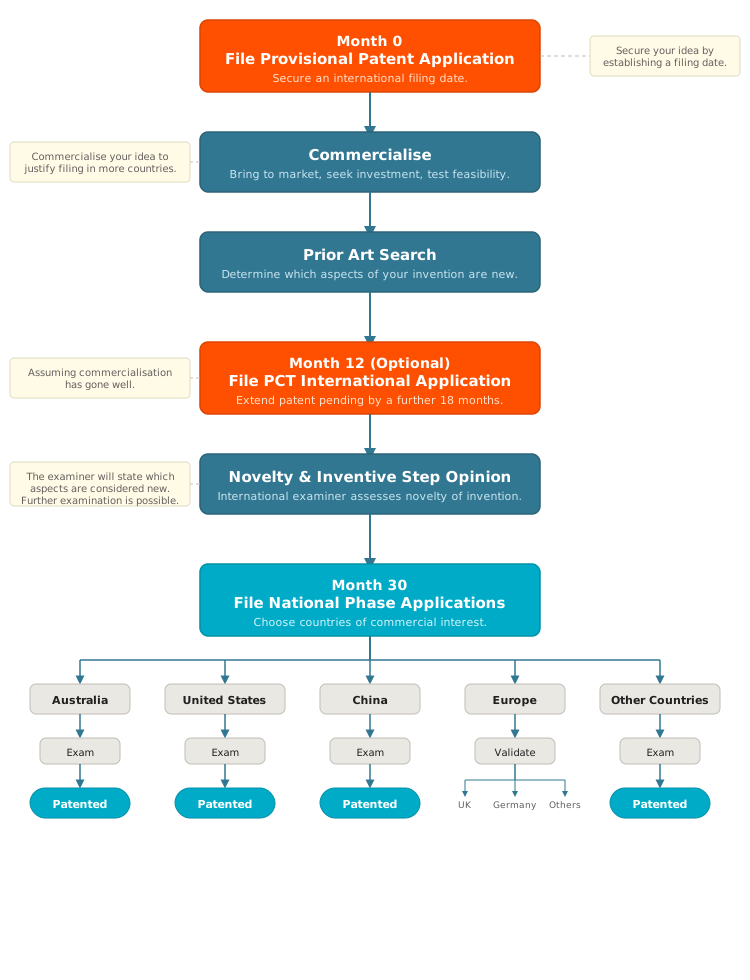
The patent application process from initial filing through to patent protection in each country of interest
Stage 1: Provisional patent application
The process typically begins with filing a provisional patent application. This establishes an international priority date and provides 12 months of patent pending status — a critical first step that secures your position while you assess the commercial viability of the invention.
During the provisional period, you can begin commercialising, approaching investors, refining the product, and testing market reception — all without jeopardising your patent rights. Any improvements developed during this time can be captured through additional provisional filings or incorporated when the complete application is prepared.
The provisional application is never published. If you decide not to proceed, your invention remains confidential and the application simply lapses.
It is important to note that there is no such thing as an international patent. Patents are territorial rights, and protection must ultimately be obtained in each country individually. However, the provisional application establishes a single priority date that is recognised internationally, giving you a unified starting point for all subsequent filings.
Stage 2: Searching and early assessment
During the provisional period, there is an opportunity to assess the novelty and inventive step of the invention through prior art searching. A practical option is to request an international-type search, which is the same search that would be conducted during the subsequent PCT stage.
By bringing this search forward, you receive examiner-level feedback early — before committing to the next stage. If the search identifies relevant prior art, the patent specification can be refined to focus on the features that distinguish your invention from what has been done before. If the results are favourable, you proceed with greater confidence.
This approach is generally more valuable than a private pre-filing novelty search, because the search is conducted by the patent office and produces an official opinion on the claims. For more detail, see our guide on assessing whether your invention is new.
Stage 3: PCT international application
If commercialisation is progressing well at the end of the provisional period, the next recommended step is filing a PCT (Patent Cooperation Treaty) application. The PCT extends the international patent pending period by a further 18 months, giving you up to 30 months from your initial filing date before you must select individual countries.
The PCT system, administered by WIPO and covering 158 contracting states, provides two significant advantages beyond the extended timeline:
- Centralised search and opinion. The PCT examiner conducts an international search and issues a written opinion on the novelty and inventive step of each claim. If an international-type search was conducted during the provisional stage, the PCT opinion will typically build on that earlier assessment, giving you a consistent and reliable indication of prospects.
- Opportunity to address objections early. If the written opinion raises objections, you can request an optional international preliminary examination to argue your case and potentially secure a favourable opinion before entering the national phase. This can significantly reduce the cost and complexity of prosecution in individual countries.
A favourable PCT written opinion is persuasive on national examiners, reducing the likelihood of duplicative objections in each country.
Stage 4: National phase entry
At the end of the PCT period, you select the countries where enforceable patent protection is required. This is known as national phase entry and typically occurs at 30 or 31 months from the original priority date.
By this point, you should have a clear picture of the commercial landscape: which markets are generating revenue, where competitors are active, and where patent protection will deliver the greatest commercial return. Common selections include:
- Consumer markets — such as Australia, the United States, and Europe
- Manufacturing markets — such as China and India
- Regional markets — accessible through mechanisms such as the European Patent Convention
A small number of countries, including Argentina and Taiwan, are not accessible through the PCT route and require direct filings. For a broader discussion of international strategies, see our guide to international patents.
Stage 5: Examination and grant
Once national phase applications are filed, each must undergo examination in its respective jurisdiction before a patent is granted. In Australia and the United States, a first examination report is typically received within 12 to 18 months of requesting examination. In Europe and many Asian jurisdictions, the timeline can be two to three years or longer.
In some countries, examination must be requested separately and can be deferred — which provides additional flexibility for managing costs and timing. This can be strategically useful when you want to keep the application pending while monitoring market developments or competitor activity.
Overall, from the initial provisional filing through to grant in major jurisdictions, a typical timeframe is three to five years. Expedited examination mechanisms are available in some countries where faster grant is commercially necessary. For a more detailed discussion of timelines, see our guide on how long it takes to get a patent.
Why the staged process matters
The staged approach is not simply a procedural formality — it is a deliberate strategy that aligns patent expenditure with commercial progress. At each stage, you have the option to continue, defer, or stop based on the commercial reality of your invention. This means you are never over-committed, and your patent investment is always informed by real market feedback.
If you have an invention with commercial potential, contact Patentec for a complimentary consultation. We will assess your invention and recommend a process tailored to your commercial objectives.