
The process is more straightforward than most people expect. Below is a practical, step-by-step guide to securing patent protection for your idea in Australia and overseas, from initial assessment through to granted patents in the countries that matter to your business.
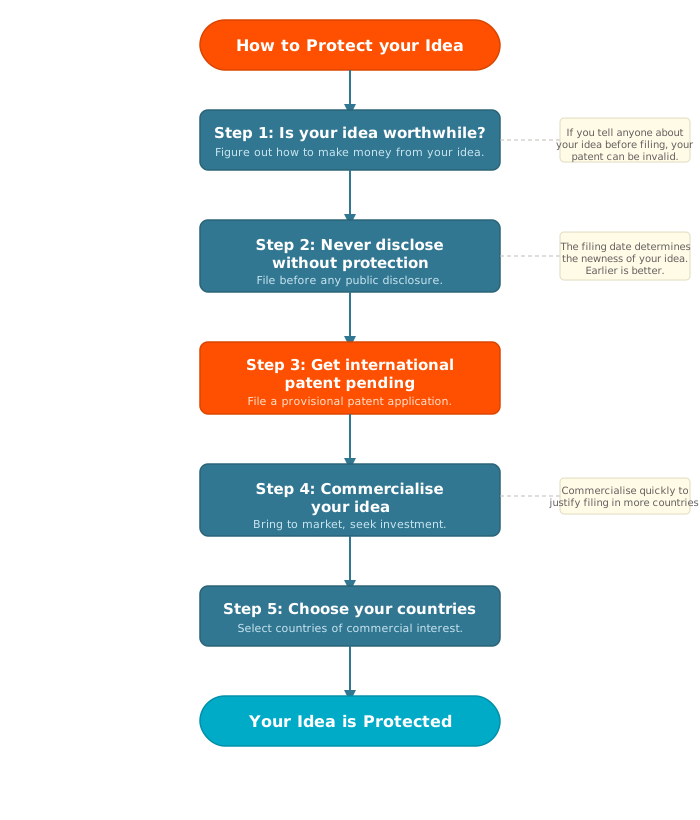
Flowchart for protecting your idea in Australia and overseas
Step 1: Assess the commercial potential of your idea
Before investing in patent protection, take an honest look at whether your idea has genuine commercial potential. A patent is a commercial tool — its value is directly tied to the market opportunity it protects.
A patent without a market is a cost. A patent protecting a viable product is an asset.
Consider how your idea could generate revenue. You might manufacture and sell the product yourself, license the intellectual property to others in return for royalties, or use the patent to attract investment and build a business around the technology. Each of these paths benefits significantly from having enforceable patent protection in place.
If you are unsure whether your idea has commercial merit, we recommend a brief initial assessment before proceeding. Understanding the market opportunity will also help you make better decisions later in the process about which countries to pursue.
Step 2: Keep your idea confidential
This step is critical. Public disclosure of your invention before filing a patent application can destroy its novelty, making it ineligible for patent protection in most countries. Public disclosure includes publishing details online, demonstrating the product at trade shows, offering it for sale, or even discussing it with potential investors or manufacturers without a confidentiality agreement in place.
Never disclose your idea publicly before filing. In most jurisdictions, any pre-filing disclosure can permanently destroy your right to a patent.
While Australia offers a limited 12-month grace period for the inventor's own disclosures, many other countries do not. Relying on a grace period will narrow your options for international protection later. The safest approach is always to file before you disclose.
Step 3: File a provisional patent application
The first formal step in securing protection is filing a provisional patent application. This establishes an international priority date — the earliest date from which your invention is legally recognised as yours — and gives you 12 months of "patent pending" status.
During this period, you can begin commercialising your idea, approaching investors, testing the market, and refining the product, all without jeopardising your patent rights. If you develop improvements during this time, they can be captured through additional provisional filings.
Critically, the provisional application is never published. If you decide not to proceed, your idea remains confidential. There is no public record of your filing.
The quality of your provisional application matters. You only obtain a priority date for the features described in the specification. A thoroughly drafted application provides a stronger foundation for the entire 20-year life of the patent.
Step 4: Commercialise without delay
Once your provisional application is filed, begin commercialisation immediately. The 12-month provisional period is your window to gather the market intelligence you need to make informed decisions about next steps.
Use the provisional period to test the market, approach investors, and build commercial traction — so you can make informed decisions when the 12 months expire.
This is also an appropriate time to consider an international-type search, which provides early examiner-level feedback on the novelty and inventive step of your invention. This information can guide how you refine the patent specification and strengthen your position before the next stage.
Step 5: Extend protection with a PCT application
If commercialisation is progressing well, the next recommended step is filing a PCT (Patent Cooperation Treaty) application. This extends your international patent pending period by a further 18 months — giving you up to 30 months from your initial filing date before you need to select individual countries.
The PCT also provides a centralised search and written opinion on the patentability of your invention. If the opinion is favourable, it strengthens your position in every country you enter. If objections are raised, there is an opportunity to address them before committing to costly national filings.
Step 6: Enter your countries of interest
At the end of the PCT period, you select the countries where you want enforceable patent protection. This is called national phase entry and typically occurs at 30 or 31 months from your original priority date.
Common choices include Australia, the United States, Europe, China, and other markets relevant to your product. Each application will undergo examination in its respective jurisdiction before a patent is granted. In some countries, examination can be deferred, allowing you to manage costs strategically.
For more detail on timelines and international filing strategies, see our dedicated guides.
Why the staged approach works
The patent process is deliberately designed to be staged. You do not need to commit to the full cost of multi-country protection from the outset. Each stage gives you more time, more market data, and more control over where and how you invest in protection.
This staged approach is particularly valuable for start-ups and individual inventors who need to validate their idea commercially before committing to significant expenditure. It also ensures that by the time you enter specific countries, you have a well-tested invention, a refined patent specification, and a clear commercial rationale for each filing.
To understand why patent protection matters and how it fits within a broader IP strategy, read our guide to the commercial benefits of patents.
Take the first step
If you have an idea with commercial potential, the most important thing you can do right now is secure a priority date. Contact Patentec for a complimentary initial consultation. We will assess your invention, explain your options, and recommend a protection strategy tailored to your commercial goals.